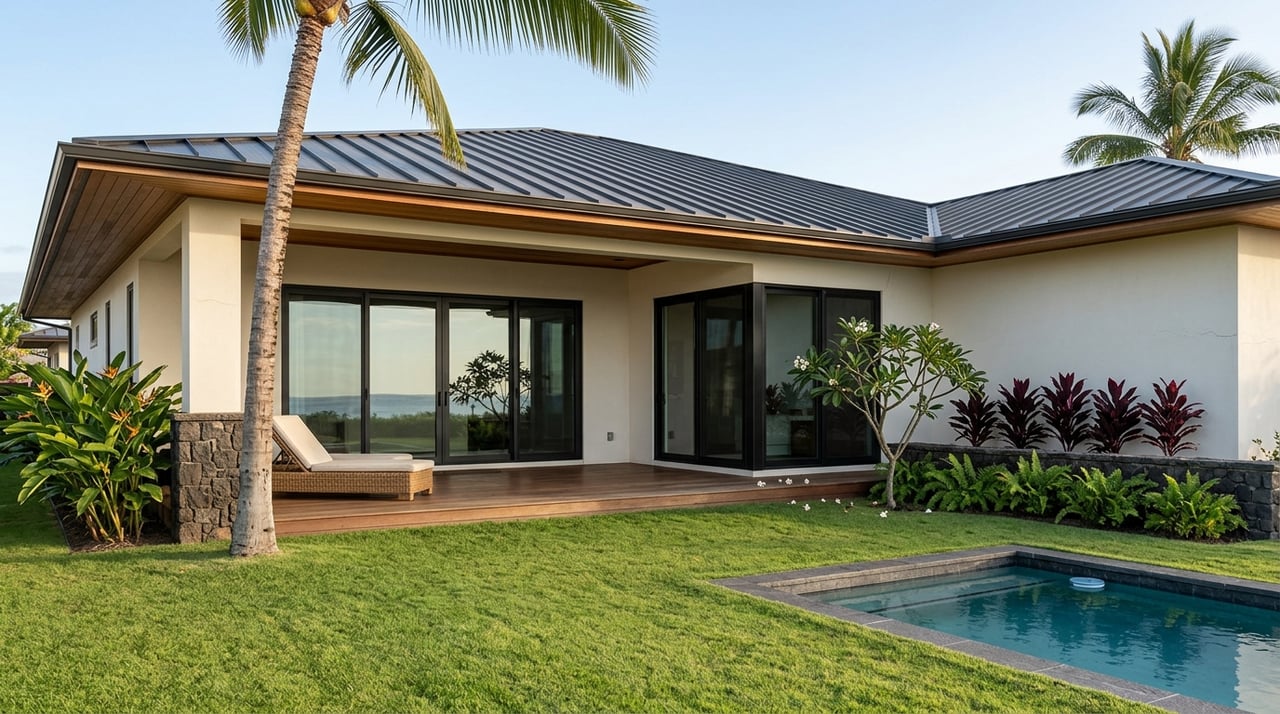
Wondering whether an oceanview home or an in-town home is the better fit in Kailua-Kona? It is a common question, especially if you are trying to balance scenery, convenience, upkeep, and budget in one decision. The good news is that each option offers real advantages, and the right choice usually comes down to how you want to live day to day. Let’s dive in.
How to Think About the Comparison
In Kailua-Kona, “oceanview” is best understood as buyer shorthand, not a formal property category. In practice, it often refers to mauka or coastal-slope homes that capture water views and a more residential retreat feel.
“In-town” usually means homes closer to the Aliʻi Drive, Kuakini Highway, and Palani Road core. That area is the center of much of Kona’s commercial, civic, and visitor activity, so it tends to offer easier access to daily needs.
That means this is not just a style choice. It is often a comparison between two different routines, two different maintenance profiles, and two different price bands.
Price Differences in Kailua-Kona
One of the first things buyers notice is how wide the pricing range can be around Kailua-Kona. Current data for the broader 96740 ZIP code shows a median listing price of about $949,999, but nearby neighborhood medians vary quite a bit.
For example, Kailua-Kona is around $737,000, Kahaluu is about $978,000, Keauhou is about $1.099 million, and Kohanaiki is about $1.411 million. While every property is different, this spread helps show why view-oriented or coastal-slope homes often land in a higher price range than more central options.
Of course, the view is not the only factor. Lot size, condition, HOA or condo structure, and exact location can all change the comparison quickly, so it helps to evaluate homes neighborhood by neighborhood rather than assume one rule fits all of Kona.
Oceanview Homes: What You Gain
For many buyers, the biggest draw of an oceanview home is simple: the setting. You may get wider sight lines, more privacy, breezes, and a stronger sense of separation from the busier parts of town.
That can create a true retreat feel, especially if you want your home to feel calm and tucked away at the end of the day. If your top priorities are views and a more residential atmosphere, oceanview properties often stand out.
These homes can also appeal to buyers who do not mind more driving if it means gaining more space or a quieter setting. If you work remotely, split time on the island, or simply value your home as a place to unwind, that tradeoff may feel well worth it.
Oceanview Tradeoffs to Expect
The same features that make oceanview homes appealing can also create extra complexity. In many cases, you will drive farther for errands, dining, and civic services than you would from a more central location.
Access can also vary from one property to another. Slope, road approach, and parking setup matter more than many buyers expect, especially when comparing a scenic hillside home to a more central property with easier daily access.
Maintenance is another big consideration. Coastal conditions can be harder on homes, and salt exposure in marine environments can affect exterior finishes, hardware, roofing materials, drainage components, and other exposed features over time.
Shoreline Rules and Hazard Review
If a property is near the shoreline, the permitting picture matters too. Hawaiʻi County says the Special Management Area, or SMA, is the area close to the shoreline where development can have added implications, and the Planning Department administers SMA use permits and shoreline setback variances.
County rules also establish a shoreline setback line and a minimum 40-foot shoreline setback. That does not mean every oceanview home is affected in the same way, but it does mean shoreline-adjacent properties deserve careful review before you move forward.
Hazard exposure is also part of the equation. The County’s General Plan notes that the entire North Kona coastline is subject to tsunami inundation, and Kailua and Keauhou have recorded run-up and damage in the past.
In-Town Homes: What You Gain
If convenience is high on your list, in-town living has a lot to offer. Kailua-Kona serves as a center for government, commercial, and industrial activity, and the town core gives you faster access to shopping, dining, civic services, and many everyday stops.
That can make a big difference in how your week feels. Instead of planning every errand as a longer outing, you may be able to keep daily tasks more efficient and stay closer to where activity already happens.
Some buyers also appreciate being closer to the heart of Kona’s day-to-day rhythm. If you want easier access to the established village area and nearby services, in-town homes can offer strong practical value.
The Reality of Convenience
Even so, in-town does not mean effortless walkability or zero hassle. The County’s long-range plan identifies pedestrian-oriented improvements for Aliʻi Drive, but it also notes that vehicular and pedestrian systems within Kailua Village are poor and that parking is limited.
So while in-town homes often win on convenience, they can also come with more traffic friction and a busier mixed-use environment. That is important to keep in mind if you are hoping for a quiet residential feel.
Transit exists, but it is still modest. Hele-On Route 202 serves Central and North Kona with stops including the West Hawaiʻi Civic Center and Kona airport, and it operates in roughly half-hour service windows from about 6:00 a.m. to 7:30 p.m. That may help with some errands, but most buyers in Kona will still rely on driving.
Maintenance and Risk Profiles
A big part of this decision comes down to what kind of upkeep you want to take on. Oceanview and shoreline-adjacent homes may offer stronger scenery and privacy, but they can also bring more exposure to salt air, wind, and coastal conditions.
NOAA lists coastal storms, tsunamis, coastal erosion, and sea-level rise among the main threats facing coastal communities. In practical terms, that means buyers should look beyond the lanai view and pay close attention to the home’s exterior condition, drainage, and long-term maintenance needs.
In-town homes are not maintenance-free, though. They may be less exposed to direct shoreline processes, but they can still involve slope, drainage, access, and parking issues depending on the site.
The key is to avoid assuming that one category is automatically easier. A well-located in-town property may be simpler for your lifestyle, while a view home may require more planning and upkeep but offer the exact setting you want.
Access to Airport and Daily Destinations
For many buyers, airport access matters, especially if you travel often or expect regular visitors. Kona International Airport at Keāhole is generally convenient from much of Kailua-Kona, though exact drive time depends on the neighborhood.
State airport information places the airport about 10 miles from Kailua Kona, while airport information also describes it as about seven miles northwest of town. In real life, your neighborhood choice will do more to shape convenience than the broad label of oceanview or in-town alone.
That is why it helps to test your likely routine before you buy. Think about your drive to groceries, dining, the airport, beaches, appointments, and any place you expect to visit every week.
A Simple Way to Choose
If you are deciding between the two, start with your lifestyle instead of the photos. A beautiful view can absolutely be worth it, but only if the daily tradeoffs still fit how you want to live.
Oceanview may be the better fit if you want:
- Water views and a stronger sense of retreat
- More privacy and a quieter residential feel
- Breezes and a scenic setting
- A home you are comfortable maintaining more actively
- A property that may involve more driving or more complex access
In-town may be the better fit if you want:
- Faster access to shopping, dining, and civic services
- A location closer to Kona’s activity center
- More efficient daily errands
- A practical home base for frequent in-town routines
- A willingness to accept more traffic, parking limits, or mixed-use surroundings
Checklist for Comparing Homes
When you tour properties in Kailua-Kona, use the same checklist for each one. That will help you compare lifestyle tradeoffs more clearly instead of getting pulled in by one standout feature.
Consider these questions:
- How long is the drive to your routine destinations?
- What is the lot slope and access like?
- How exposed is the home to salt air and wind?
- What exterior maintenance looks likely in the next few years?
- How easy is parking for your household and guests?
- Are there HOA or condo rules that affect use or upkeep?
- Is the property in or near the SMA or shoreline setback area?
This kind of side-by-side review is where local guidance really helps. In a market like Kona, the smartest choice is usually the one that matches both your budget and your real day-to-day priorities.
If you want help comparing specific neighborhoods, condos, or single-family homes in Kailua-Kona, working with someone who understands island logistics, maintenance realities, and property-use questions can save you time and help you make a more confident decision. When you are ready to talk through your goals, connect with Noelani Spencer.
FAQs
What is the difference between oceanview and in-town homes in Kailua-Kona?
- Oceanview homes are typically mauka or coastal-slope properties with a view premium, while in-town homes are generally closer to the Aliʻi Drive, Kuakini Highway, and Palani Road core for easier access to daily services.
Are oceanview homes in Kailua-Kona usually more expensive?
- They often are, though not always. Market data for the broader area shows a wide range of neighborhood median listing prices, and view-oriented or coastal-slope homes frequently sit in higher price bands depending on location, condition, and property type.
Are in-town homes in Kailua-Kona easier for daily errands?
- Usually yes. In-town locations tend to offer faster access to shopping, dining, civic services, and other routine stops, though traffic, parking limits, and pedestrian conditions can still affect convenience.
Do oceanview homes in Kailua-Kona require more maintenance?
- They can. Homes with more coastal exposure may need extra attention to exterior finishes, hardware, roofing, drainage, and other components because salt air and marine conditions can be more corrosive over time.
What shoreline rules matter for Kailua-Kona oceanview properties?
- If a property is near the shoreline, you may need to review Hawaiʻi County Special Management Area rules, shoreline setback requirements, and whether any permits or variances affect the property.
Is living in-town Kailua-Kona the same as being able to walk everywhere?
- Not necessarily. In-town homes are often more convenient for access, but county planning documents note limited parking and challenges with both vehicle and pedestrian systems in Kailua Village.
How should buyers compare oceanview and in-town homes in Kailua-Kona?
- Compare drive times, lot slope, access, salt and wind exposure, maintenance needs, parking, HOA or condo rules, and whether the property is near shoreline-regulated areas. That gives you a clearer picture than price or view alone.